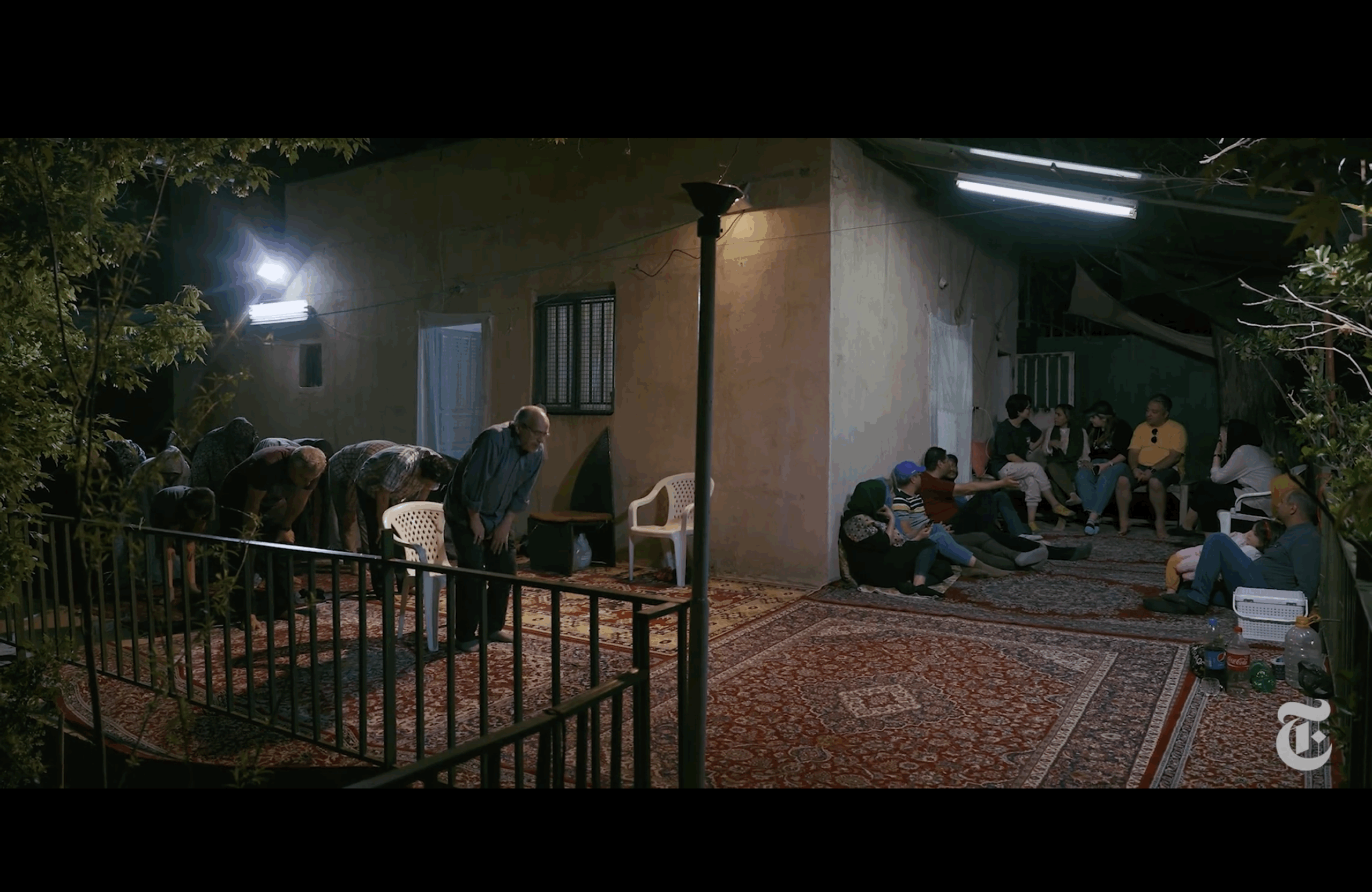
Photo from A Move by Elahe Esmaili
The feeling of home in this short film comes from family and cultural expectations. It asks the question, “Am I allowed to be myself around my family?” It also asks, “How can we be respectful of others’ cultures and beliefs while staying true to ourselves?”
I found it very interesting how the filmmakers were given such an intimate look into the life of this family, yet they never interacted with the family, even in an interview. The only time the filmmakers or the camera was acknowledged was when Elahe asked them if they could see her armpits, more of as a joke third opinion because she wanted some to agree with her. By filming this, they get a seemingly unfiltered look at this family, but the audience doesn’t really know exactly how authentic it is. The family could be acting completely differently than they normally would, and no one would even know. The audience and documentarians must trust that we are getting an accurate depiction of these people’s home and life.
This film focuses on framing people and mainly utilizes mirrors, windows, and doorways to do so. It creates a sense of separation. The first shot features Elahe’s parents in two different rooms, visible through each doorway. They are both doing different things, but sit down and move at the same time. Later, the father is praying in his room, and there is a mirror facing the camera where a little girl is seen peeking into the room. Having three generations in one house shows how full of life the house is and how family-oriented they are. At the Ramadan feast, there is a scene where one group of the family is praying and the other group is silently sitting on the other side of the wall. This shows a clear divide between tradition and modernity or changing ideals. This family is able to coexist while having differing opinions, and they can still feel at home with each other.
Leave a Reply