Dorothea Lange was a woman who had a strong work ethic and was willing to sacrifice in order to achieve her career goals at a time when women were generally expected to be homemakers. Lange strived to document people in a real and raw way. She cared about truly representing people.
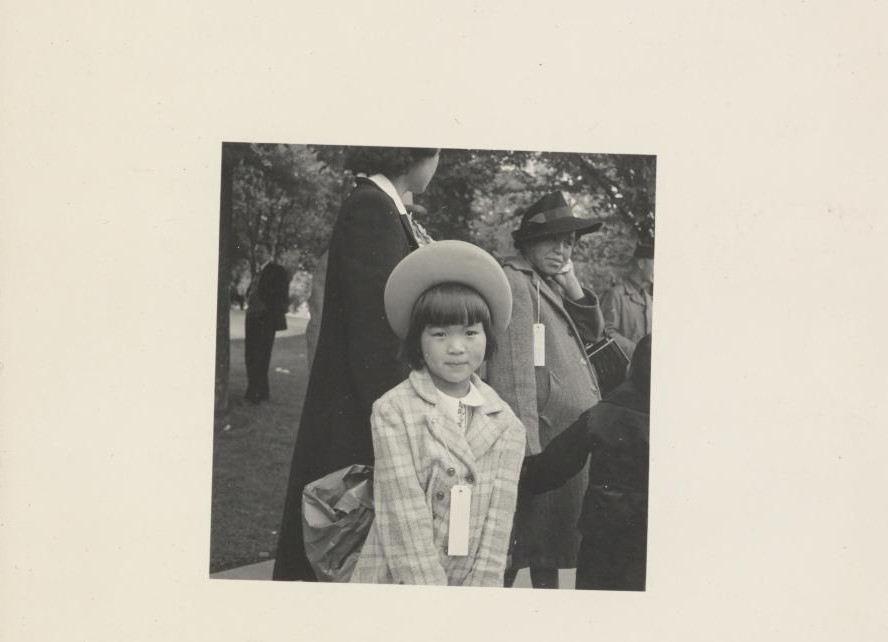
The image I have selected shows a young Japanese-American girl with her family, about to go on a bus to an internment camp. She slightly smiles at the camera, seemingly shy and nervous. The child and the people behind her have tags on their coats that are used to identify each person. This is reminiscent of the stars of David used by the Nazis to publicly identify a person as Jewish in order to discriminate or persecute them. It also reminds me of a less permanent, yet still degrading way of marking a person, like the Nazis did when tattooing each person in a Concentration camp with a number. This was a way of dehumanizing these people, and it feels intentional that Lange chose to document this. Deciding to photograph a young girl, you can see the innocence of these people who were essentially being imprisoned for being a certain ethnicity. The girl probably had little to no idea where she was going and was probably very scared. Lange wanted to show the vulnerability and humanity in her subjects.
As discussed in her biographical documentary, Grab a Hunk of Lightning, Dorothea Lange had a bit of a guilty conscience about accepting the job to photograph internment camps because it was meant to be used as propaganda to better the image of these camps. She decided to reluctantly take the job to try to shed light on the injustices of these camps. Her work ended up not being released by the government because they could see through her photography that she felt empathy for these people.
Leave a Reply