My documentary meditates on the idea of never staying in one place. I discuss how I have moved so many times as a child and how that has affected me and made me become the person I am today. Home isn’t just one place for me because I never had one location to always go back to that was my own. The closest I have to that is my grandparents’ house in Texas. I visit them once a year and I know that they will always be there in that house. That house is filled with so many memories growing up. This reflects how I feel that family is my home. In my documentary I bring up how the only thing that makes my new house feel like home is that my sister and mom are there. This is a similar idea.
The voice of this documentary is me. It is very obviously autobiographical because I use a voiceover throughout the whole video and everything is said in first person. I speak candidly of my experiences and don’t sugarcoat things.
Something that was discussed in Documentary Research that has stayed with me is the concept of what is shown versus what isn’t in a documentary and the implications that go with that. There are many ethical implications that go with editing and filmography decisions. The documentarian has all the power to portray the subject however they want, and could completely stain the name of the person or people. Because it is a documentary, people trust that it’s a true and accurate source of information. This is something that oftentimes becomes an issue when it comes to documentaries or biopics about people that have died. The families or those close to the subject may not have any say in how their loved one is portrayed, which could make it completely inaccurate and give the world one vision of a person when they are no longer around to defend themselves.
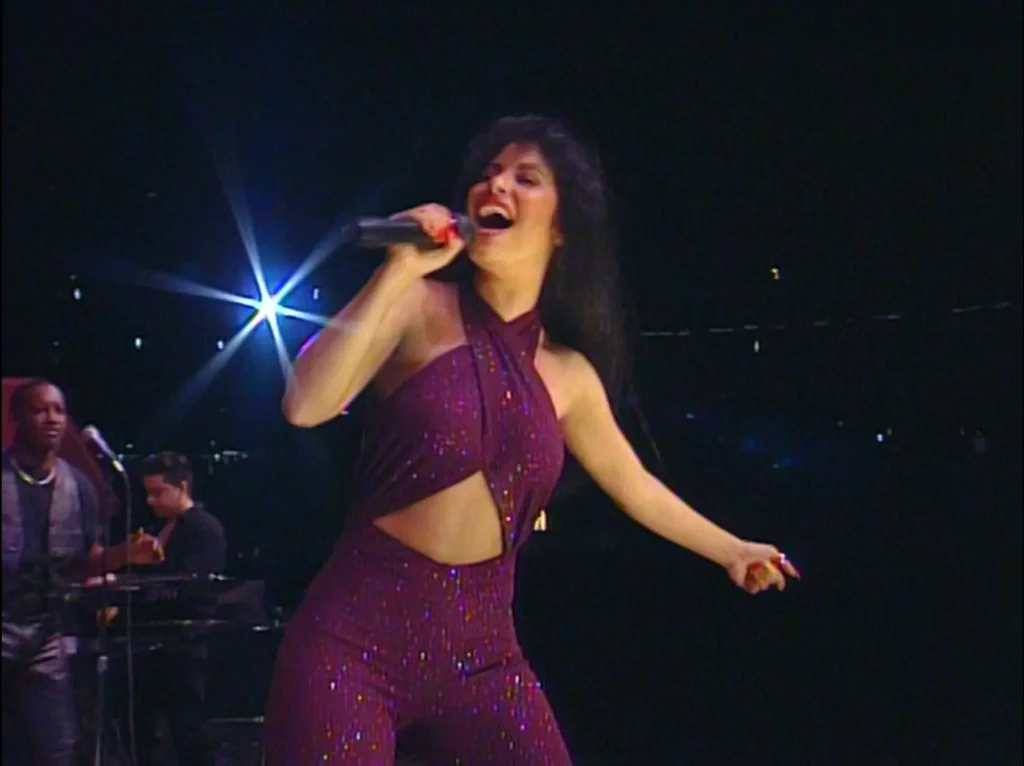
Selena Quintanilla is a great example of someone who’s image was greatly debated after her death. Her family began the search for who would protray her just months after her death. The first biopic came out two years after she died. Many people thought this was unethical because it seemed like her family was just trying to find ways to profit off of her and not let her rest in peace. The family claimed they did this so they could be the people to own her image and accurately portray her because another production company would pick up her story if she didn’t. Her father, Abraham, excluded Selena’s husband, Chris Perez from a lot of the projects that were made about her. This upset him because he didn’t get a say in how him or his wife were shown to the world. The documentary that just came out about her life on Netflix features interviews from Chris, which was a surprise that many were happy to see, but it still felt a bit off that the family is still using her image constantly and making money off of her.
My 60-second documentary was informed by my complicated relationship with the concept of home. This assignment and class came at a strange time in my life. I have been going through multiple processes of moving, which has been giving me an incredible amount of stress. I’ve been so used to moving around since I was little that I can quickly adapt to calling a new place home, but I try not to get attached to the spaces. We recently moved out of my mom’s childhood home, which we have lived in for the past five years. I grew up visiting that house every summer, so it holds a lot of memories, but now, I don’t know when I’ll go back. Our new house is a winter rental, so we will be out and find a new place in the summertime. The fact that I already know this will help me not get attached to the location. Locations are a very temporary thing for me. College dorms are a perfect example. You live in a location for eight months, building memories and a relationship to the space, knowing there is a time limit. This can evoke good or bad responses. On one hand, the next year in a new dorm can be a refreshing start, but for someone like me, it can be tough. I like stability, and I find it hard getting attached to a space and making it my own, just to never return the next year.
During the process of making this documentary, I got the opportunity to move to a better dorm, so I took it. This ended up changing the direction of my documentary a bit, because I felt the irony of all this happening at once was too much. It fit in perfectly with the theme. The documentary reveals that my location is ever-evolving.
Dorothea Lange was a woman who had a strong work ethic and was willing to sacrifice in order to achieve her career goals at a time when women were generally expected to be homemakers. Lange strived to document people in a real and raw way. She cared about truly representing people.
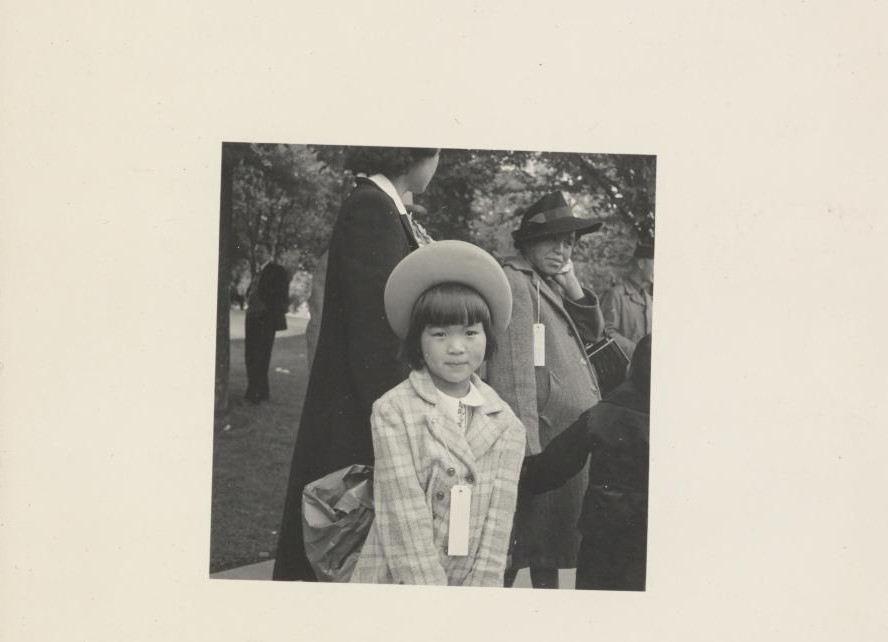
Lange, Dorothea. Hayward, Calif.–A young member of an evacuee family awaiting evacuation bus. Evacuees of Japanese ancestry will be housed in War Relocation Authority centers for the duration. 1942-05-08, War Relocation Authority Photographs of Japanese-American Evacuation and Resettlement, UC Berkeley, Bancroft Library.
The image I have selected shows a young Japanese-American girl with her family, about to go on a bus to an internment camp. She slightly smiles at the camera, seemingly shy and nervous. The child and the people behind her have tags on their coats that are used to identify each person. This is reminiscent of the stars of David used by the Nazis to publicly identify a person as Jewish in order to discriminate or persecute them. It also reminds me of a less permanent, yet still degrading way of marking a person, like the Nazis did when tattooing each person in a Concentration camp with a number. This was a way of dehumanizing these people, and it feels intentional that Lange chose to document this. Deciding to photograph a young girl, you can see the innocence of these people who were essentially being imprisoned for being a certain ethnicity. The girl probably had little to no idea where she was going and was probably very scared. Lange wanted to show the vulnerability and humanity in her subjects.
As discussed in her biographical documentary, Grab a Hunk of Lightning, Dorothea Lange had a bit of a guilty conscience about accepting the job to photograph internment camps because it was meant to be used as propaganda to better the image of these camps. She decided to reluctantly take the job to try to shed light on the injustices of these camps. Her work ended up not being released by the government because they could see through her photography that she felt empathy for these people.
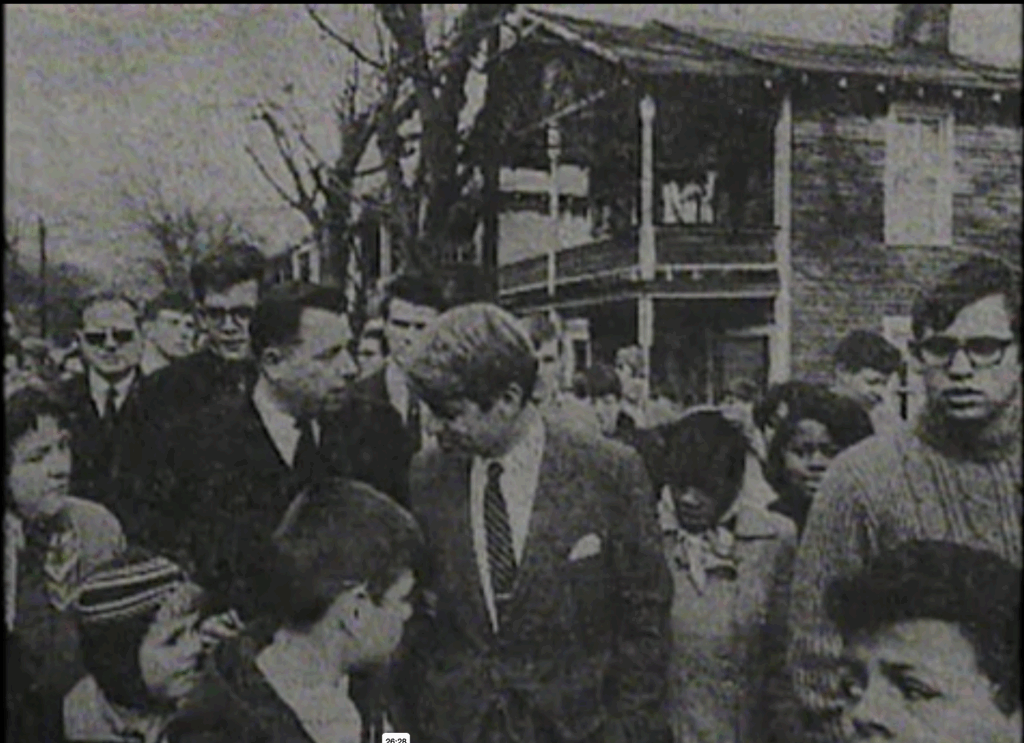
The moment I chose in Stranger With A Camera is at the 25:45 timestamp. This part of the film discusses how Whitesburg, Kentucky, was perceived by the large broadcasting corporations that would come to the small town and document what life was like for the locals. The tension posed is that most people in the town did not feel that they were being accurately portrayed. The film as a whole presents this tension by showcasing the multiple perspectives of what, how, and why the murder happened.
A local woman discusses how they only showed the poverty in the town, not middle class areas of the town. The camera crew only targeted the people who were in the worst situations. Elizabeth Barret poses the idea that “Media images can bring out powerful and conflicting emotions.” (Stranger With A Camera, 26:46). Barret also poses the question of whether people didn’t like the way their town was represented because they were afraid of being considered poor as well. The locals have basically no say in how they are shown. They are just living their lives, and these camera crews come and disrupt their daily life.
In the introduction of Doing Documentary Work, Robert Coles begins by referencing James Agee and his book Let Us Now Praise Famous Men. There are extremely close parallels between what Agee did and what CBC, BBC, Hugh O’Connor, and Elizabeth Barret were all doing. They were all documenting an impoverished community in a very specific location from their own unique perspectives. Agee, coming from Fortune Magazine, is similar to the idea of an outsider coming to a place where the locals may not want to be represented by the outsider who has more power in the grand scheme of things.
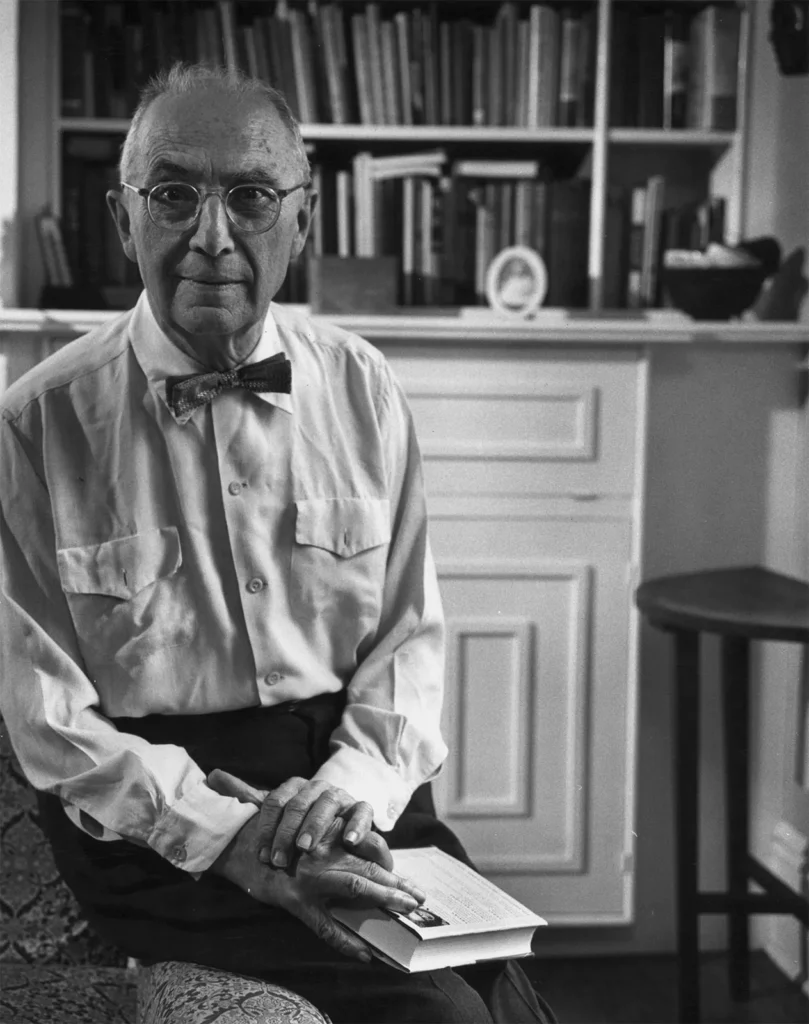
In chapter 1 of Robert Coles’ Doing Documentary Work, he discusses the ethical dilemmas that poet and doctor William Carlos Williams faced while working in underprivileged communities in Paterson, New Jersey.
Williams felt that people who used these communities for their research or journalistic purposes were exploiting these people. His dilemma is that he recognized he was doing a similar thing and struggled with this truth. Williams would make house calls to people who couldn’t afford healthcare for free in the 1930s and would then go home to his comfortable life and write poetry about these experiences. He described these calls as “fly-by-night raids or invasions” (Williams, Coles 46). Williams lived in Rutherford, New Jersey, which was very close to his ‘field’ of Paterson. The proximity of his wealthy, well-to-do community to this struggling, impoverished community forced him to view himself as an outsider. He felt he couldn’t fully immerse himself in the writing process because he couldn’t write while experiencing the community as a doctor.
The topic of location connects with Williams’ experiences because he felt that he was invading these locations. He recognized the almost exploitative nature of his studies and felt that he possibly wasn’t fully portraying his subjects with the most authenticity because he would not write on location.
An example from my own life that reminds me of this moment in the book is the location where I live. I live in a rural town in New Jersey that shares a border with Lakewood, New Jersey, which has a population of over 70% Orthodox Jewish people. These two towns are so close to each other, but they feel like different worlds in every sense. Since the town is so densely populated, many Orthodox people are moving to my town from Lakewood and heavily populating neighborhoods, including the street next to mine. There is a large sense of separation between the two streets, even though they are only one street away. It feels like we are two different sides that don’t understand each other, and it brings a strange air between us all. My grandmother is religious, so she befriends many of the people in the area, but even with that connection, there is no true connection between us.
The feeling of home in this short film comes from family and cultural expectations. It asks the question, “Am I allowed to be myself around my family?” It also asks, “How can we be respectful of others’ cultures and beliefs while staying true to ourselves?”
I found it very interesting how the filmmakers were given such an intimate look into the life of this family, yet they never interacted with the family, even in an interview. The only time the filmmakers or the camera was acknowledged was when Elahe asked them if they could see her armpits, more of as a joke third opinion because she wanted some to agree with her. By filming this, they get a seemingly unfiltered look at this family, but the audience doesn’t really know exactly how authentic it is. The family could be acting completely differently than they normally would, and no one would even know. The audience and documentarians must trust that we are getting an accurate depiction of these people’s home and life.
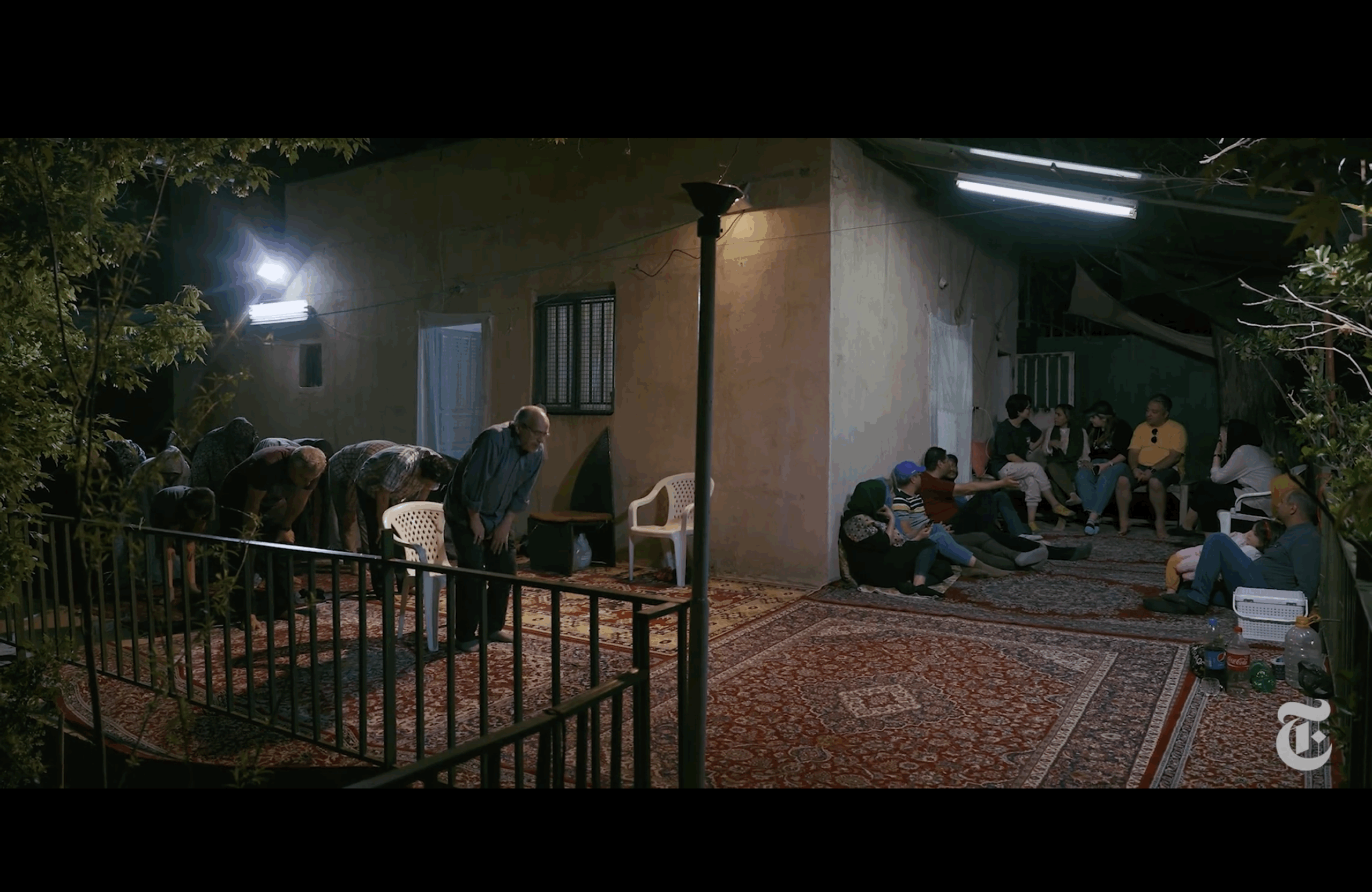
This film focuses on framing people and mainly utilizes mirrors, windows, and doorways to do so. It creates a sense of separation. The first shot features Elahe’s parents in two different rooms, visible through each doorway. They are both doing different things, but sit down and move at the same time. Later, the father is praying in his room, and there is a mirror facing the camera where a little girl is seen peeking into the room. Having three generations in one house shows how full of life the house is and how family-oriented they are. At the Ramadan feast, there is a scene where one group of the family is praying and the other group is silently sitting on the other side of the wall. This shows a clear divide between tradition and modernity or changing ideals. This family is able to coexist while having differing opinions, and they can still feel at home with each other.